

We make HR simple
HR Hero is an essential resource for HR professionals, providing comprehensive and up-to-date analysis, tools, and resources to handle the complexities of human resources management effectively. Our value proposition lies in empowering HR teams with the knowledge and support they need to navigate challenging HR situations, implement best practices, and achieve organizational success.
Get StartedAccomplish your daily workload with confidence
-
Know the laws and when they change
Get expert legal analysis, guidance, and easy-to-understand explanations of the state and federal laws that impact HR practices.
-
Streamline manual processes
Streamline the time it takes to manage administrative, planning, and document management tasks.
-
Salary benchmarking data
Make informed payroll decisions with salary averages by industry, company size, geographic data, and job titles.
-
Straightforward compliance and training
Strengthen the performance and compliance of your organization with ongoing employee training and development.
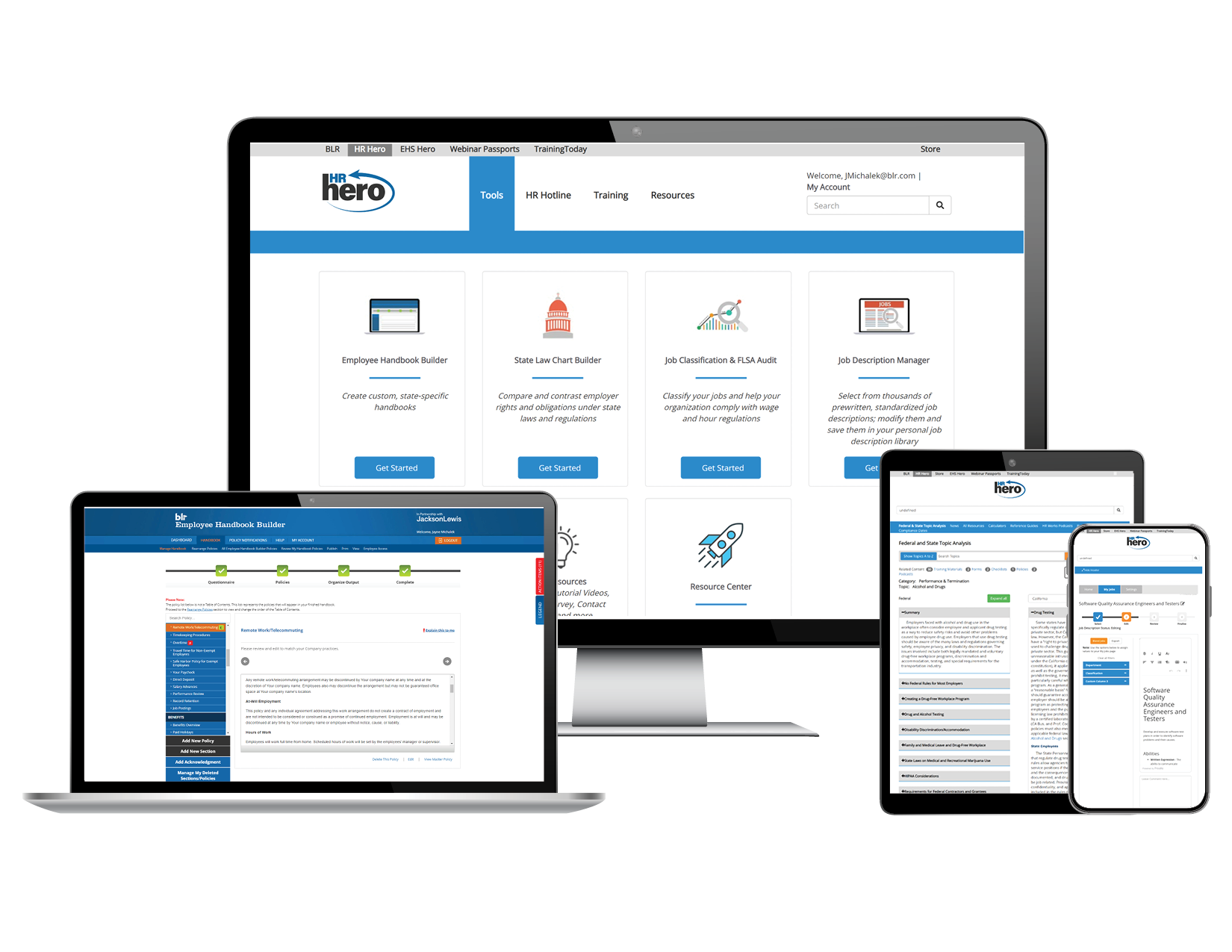
Your hub for all things HR

Unlock HR compliance and workflow efficiencies with HR Hero
Our platform is designed to streamline HR processes, saving valuable time and allowing HR teams to focus on strategic initiatives. HR Hero provides practical solutions that address real-world HR challenges, offering step-by-step guidance and actionable recommendations based on industry best practices and legal compliance requirements.
415 hrs
time saved annually streamlining critical tasks
4.3
average client score from Capterra
5.7x
average number of times HR Hero subscribers have renewed
75%
of clients use HR Hero every week
Annual hours saved
- 164 hrs saved maintaining handbooks and writing policies
- 93.6 hrs saved training
- 727.5 hrs saved on hiring and staffing
- 538 hrs saved administering compensation and company programs
- 549.6 hrs saved on department creation and records management
Subject matter expertise
- 19,500+ Hotline questions resolved
- 52 critical HR updates deployed annually
- 75 HR topic areas covered
- 100+ Collective years of industry experience
Client insights
- On average HR Hero customers have renewed 5.7 times
- 54 industries served across current subscribers
- 75% of people use HR Hero every week
- 88% of subscribers agree that HR Hero decreases regulatory research time, eases the facilitation of training, or automate manual processes
- Capterra ranking 4.3 out of 5
Tools and resources
- 22 HR calculators for analysis and benchmarking
- 8 comprehensive reference guides on key employment law areas
- Over 100 topical HR podcasts
- Hundreds of specialized checklists, forms, guidance documents, and policies
- 1300+ blending learning options including instructor-led training (ILT) materials and audio resources
HR Solutions
A fully configurable, cloud-based platform that offers legal analysis, training, and best-in-class tools for your team.
Browse All Solutions-
Employee Handbook Builder
Build, update, and customize a state-specific, cloud-based employee handbook with one simple tool.
Learn more -
Job Description Manager
Over 2,000 job descriptions are ready for your customization, complete with team-based approvals.
Learn more -
Job Classification and FLSA Audit Tool
Save time and money, and gain peace of mind that your FLSA practices are in compliance with automated risk assessments, and an employee classification tool.
Learn more -
Salary Finder
Ensures instant access to the salary data you need to make smart and competitive pay decisions.
Learn more -
Federal and State Topic Analysis
A side-by-side, deep dive into 90+ key employment laws and requirements.
Learn more -
HR Hotline
Get the answers you need when you need them. Thorough, clear and concise answers to your most pressing questions, available by phone, chat, or email.
Learn more